

Medical Gas Systems and AS 2896: A Guide for Hospitals
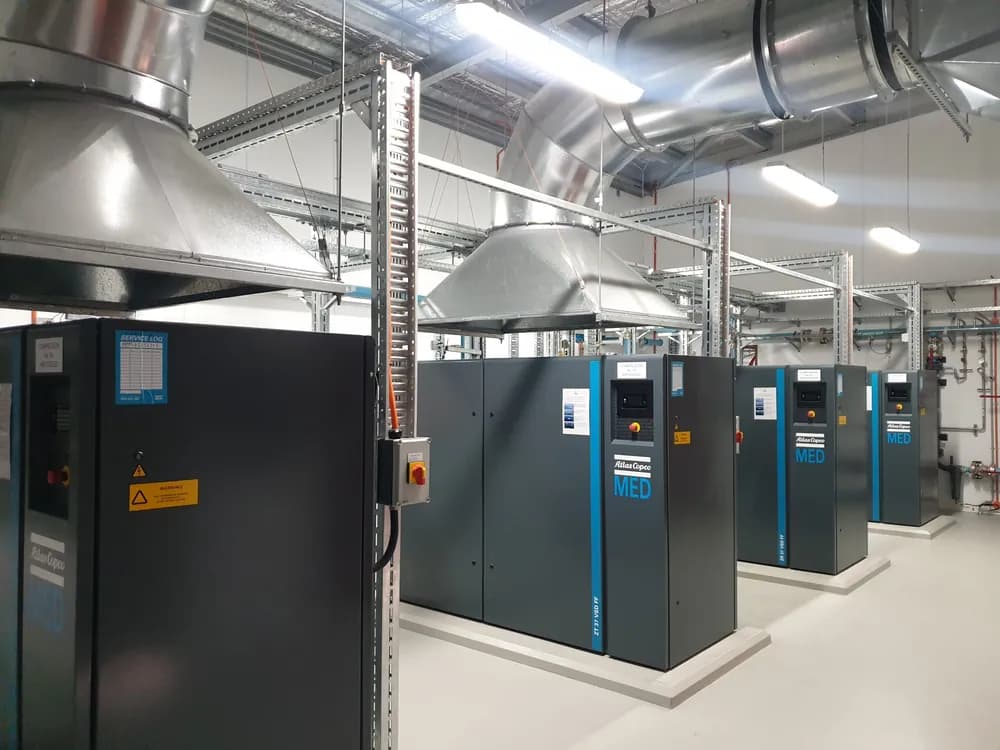
A medical gas pipeline system is life-support infrastructure. When a clinician connects equipment to a wall outlet, they are trusting that the right gas will come out, at the right pressure and flow, every time. That trust rests on how the system was designed, installed, tested and maintained, and in Australia the benchmark for all of it is AS 2896.
This guide explains what the standard covers, which gases it applies to, how a system is tested and certified before patients use it, and what hospitals, day surgeries and aged-care operators need to keep on top of afterwards.
What AS 2896 covers
The current edition is AS 2896:2021, Medical gas systems: Installation and testing of non-flammable medical gas pipeline systems. It replaced the 2011 edition and sets out requirements for the safety, construction, testing, certification, operation and maintenance of non-flammable medical gas pipeline systems (MGPS) used for patient care, surgical tools, and therapeutic and diagnostic purposes.
In practice, an MGPS covers everything from the source of supply to the outlet at the bedside. That includes:
- Cylinder manifolds, cryogenic liquid vessels, medical air compressors and suction plant
- Pressure regulation, relief valves and alarm systems
- Pipeline reticulation, risers, droppers and zone isolation valves
- Terminal units (the wall and pendant outlets) and services modules such as pendants and bedhead panels
The 2021 edition added a normative appendix on roles and responsibilities, introduced purity testing requirements for medical and surgical tool air, revised pressure and flow performance testing, and addressed the detection and prevention of leaks and cross-connections.
Which gases are covered
AS 2896 applies to pipeline systems supplying any of the following:
- Oxygen
- Medical air
- Nitrous oxide, and nitrous oxide/oxygen 50/50
- Surgical tool air
- Carbon dioxide, and carbon dioxide in oxygen mixtures
- Helium and helium/oxygen mixtures
- Medical suction (the standard's preferred term for what is commonly called vacuum)
- Anaesthetic gas scavenging
Most hospitals reticulate oxygen, medical air and suction as a minimum. Operating theatres and procedural areas typically add nitrous oxide, surgical tool air, scavenging and sometimes carbon dioxide. Aged-care facilities usually run simpler systems, often oxygen and suction, but the same standard applies to whatever is piped.
Design and installation: getting it right before the walls close
A compliant system starts at design. The designer needs to establish the demand at each outlet and in each zone, size the source of supply with appropriate backup, and lay out isolation valves so a section can be shut down for maintenance or an emergency without taking out an entire ward. Special care locations, such as theatres, recovery and critical care, need particular attention to supply continuity.
During installation, AS 2896 sets requirements for materials, oxygen compatibility and cleanliness of pipe and components, jointing (brazing) technique, pipeline supports, protection and identification labelling. Connecting into, or modifying, an existing live system is treated as a high-risk activity in its own right, with specific requirements for sealing and labelling isolation valves, marking affected outlets and retesting afterwards.
Testing, commissioning and certification
Section 5 of AS 2896 sets out a staged testing regime. Broadly, it runs in this order:
- Before concealment. A visual check, initial pressure test, zone isolation and correct-zoning checks, particulate tests, purity testing of compressor-supplied medical and surgical tool air, and a dedicated test for cross-connections, done before the working gases are introduced.
- Complete system tests. A total system pressure test, then flow and pressure testing at terminal units against the standard's performance requirements.
- Filling and final commissioning. Each pipeline is filled with its working gas, the source of supply is tested, alarm systems are checked, and a gas identity test is carried out at every terminal unit.
- Certification and as-installed drawings. The system is certified, and accurate as-installed drawings are handed over and kept up to date.
Gas identity testing is where the facility itself takes part. Under AS 2896:2021, a Healthcare Facility Representative experienced in giving medical gases to patients must witness the identity tests. ANZCA's guideline PG66(A) explains that where asphyxiant gases such as nitrous oxide or carbon dioxide are piped, or where the work affects special care locations, this role is filled by an anaesthetist. For systems supplying only oxygen, medical air and suction, an experienced clinician such as a critical care nurse may fill it.
Licensing in NSW
Since 1 October 2022, medical gas work in NSW has required a specific licence. The licensing framework separates medical gasfitting work (installing and altering the pipework) from medical gas technician work (commissioning, testing, verification and certification), and a person cannot do both the gasfitting and the commissioning on the same installation. Other states have their own arrangements, so check the rules wherever your facility is.
Maintenance: an MGPS is never "finished"
Section 6 of AS 2896 covers ongoing maintenance, including:
- Verifying correct operation of the source of supply, and inspecting manifolds, air compressors and suction pumps
- Monitoring the purity of medical air and surgical tool air
- Maintaining terminal units, pressure gauges and switches, flexible hose assemblies and NIST fittings
- Checking zone isolation valve boxes and line isolation valves
- Keeping service manuals and as-installed drawings current
Set the maintenance schedule with your MGPS contractor, your biomedical or engineering team, and the equipment manufacturers' requirements. Any modification, however small, such as adding an outlet during a ward refurbishment, should trigger the relevant tests and re-certification for the affected section before it returns to clinical use.
A practical checklist for facility managers
- Do you have current as-installed drawings showing every zone valve and outlet?
- Is there a documented roles and responsibilities framework for medical gas work, in line with Appendix K of AS 2896:2021?
- Are alarm panels tested and are alarm responses understood by clinical and engineering staff?
- Is medical air purity being monitored, especially on compressor-supplied systems?
- Is there a permit and isolation procedure for any work on a live system?
- Are certification records kept for every new installation and every modification?
Where Goldman fits
Goldman Plumbing is licensed for medical gas works. Our Licensed Medical Gas Technicians design, construct, upgrade and maintain medical gas pipeline systems, from generation plant and plant rooms through to reticulation, area alarms, outlets and commissioning. At Westmead Hospital we delivered a design-and-construct central medical air plant and 170 m² plant room, with medical air purity certification to AS 2896 and no loss of medical air supply during changeover.
Medical gas often sits alongside other critical services in the same facility. See our health care and aged care services, and our guides to Legionella risk management and TMV and backflow compliance.
Frequently asked questions
Does AS 2896 apply to aged-care facilities?
Yes, where a facility has a piped medical gas system. The standard applies to any non-flammable MGPS used for patient care, whatever the type of facility. Portable cylinders on trolleys that do not connect to a pipeline outlet are outside its scope.
Who has to witness gas identity testing?
A Healthcare Facility Representative nominated by the facility. Under ANZCA guidance, an anaesthetist is needed where asphyxiant gases are piped or special care locations are affected. Otherwise an experienced clinical practitioner may perform the role.
Do we need to retest after adding a single outlet?
Yes. AS 2896 treats connections to and modifications of existing systems as needing leak testing and further testing of the affected section, including gas identity at the new terminal unit, before clinical use.
Can the same contractor install and commission our system?
In NSW, the licensing framework does not allow the same person to do both the medical gasfitting and the commissioning work on the same installation. The rule applies to individuals, so when you programme the project, confirm how your contractor will keep the gasfitting and commissioning roles separate.
If you're planning a new medical gas installation, a plant upgrade or a compliance review, contact our team to discuss your facility.